Introduction
For contemporary industries, optimizing warehouse storage capacity while preserving effective operations is a significant task. Traditional storage configurations might not offer the space efficiency needed for large-scale operations as companies deal with rising inventory levels. By producing high-density pallet storage and minimizing the area taken up by traditional forklift aisles, a drive-in racking system provides a workable option.
Drive-in racking enables forklifts to enter specifically constructed storage lanes to place and retrieve pallets, in contrast to selective pallet racking, which offers direct access to individual pallets. Warehouses can better utilize existing floor space and vertical storage areas by storing many pallets deep thanks to this arrangement.
What Is a Drive-In Racking System?
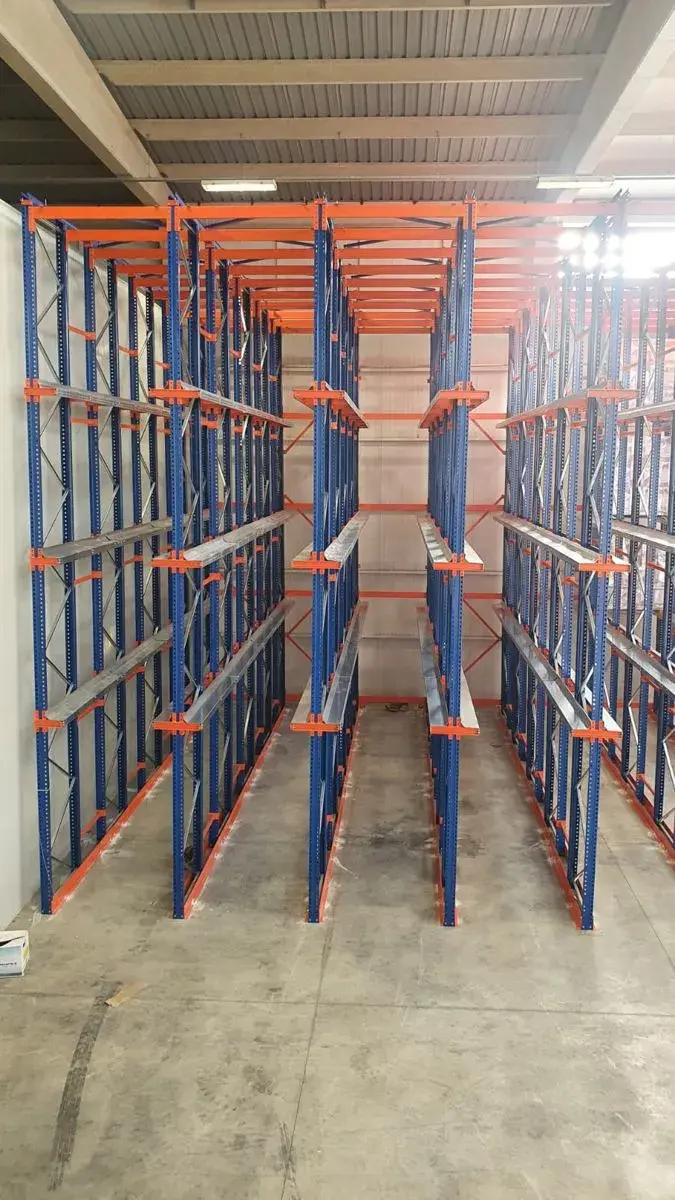
A high-density industrial storage option made to hold a lot of similar palletized goods is a drive-in racking system. Forklifts can enter the rack structure through designated storage lanes, horizontal support rails, and heavy-duty steel frames.
Instead of the traditional individual pallet beams, pallets are kept on support rails. This arrangement increases the number of storage spaces in the same warehouse area while decreasing the number of access aisles.
Businesses that manage huge numbers of identical materials, seasonal products, and bulk inventory that don't require frequent individual pallet access are most suited for drive-in pallet racking.
How Does a Drive-In Racking System Work?
Deep-lane pallet storage is the foundation of a drive-in racking system's functionality. Pallets are carefully placed on the supporting rails by forklift operators as they enter the assigned storage lane.
Usually, the first pallet is positioned as deep as possible, while the pallets that follow are positioned gradually closer to the entrance. Pallets are taken out in reverse loading order during retrieval.
The last pallet loaded is typically the first pallet retrieved in this configuration, which adheres to the Last-In, First-Out (LIFO) inventory principle.
To guaranty safe loading and unloading, the system needs appropriate forklifts, well-designed storage lanes, and adequate operating clearances.
Key Features of Drive-In Racking Systems
1. High-Density Pallet Storage
Several pallets can be kept deep within each lane thanks to drive-in racking. This enhances the warehouse's total storage capacity and decreases the number of aisles needed.
2. Heavy-Duty Steel Construction
Palletized items are supported by the system using horizontal rails, structural bracing, and industrial-grade steel uprights. Maintaining structural stability requires accurate engineering and load estimates.
3. Maximum Space Utilisation
Drive-in racking frees up additional space on the warehouse floor for storage operations by eliminating traditional forklift channels.
4. Multiple Storage Levels
Depending on warehouse height, pallet size, and load needs, the system may be set up with many storage levels.
5. Suitable for Bulk Inventory
Maintaining regular inventory systems and organizing huge volumes of identical items are made easier by dedicated storage lanes.
Benefits of Installing a Drive-In Racking System
Operational efficiency can be greatly impacted by the warehouse storage layout that is selected. For companies managing large quantities of goods, drive-in racking offers a number of benefits.
- Increased storage capacity: Keep more pallets in the warehouse's available space.
- Improved space efficiency: Reduce the requirement for multiple conventional forklift aisles.
- Better warehouse organisation: Arrange similar products in dedicated storage lanes.
- Effective vertical storage: Utilise available warehouse height through multiple pallet levels.
- Suitable for bulk operations: Support large-volume inventory management.
- Optimised storage costs: Improve the utilisation of existing warehouse facilities and potentially reduce the need for additional storage space.
Drive-In Racking vs. Drive-Through Racking
Pallet storage at high densities is the goal of both drive-in and drive-through racking systems. They have various loading and retrieval arrangements, though.
Forklift access is made possible from one side of the storage lane by drive-in racking. It is appropriate for Last-In, First-Out (LIFO) inventory management since pallets are loaded and removed through the same hole.
Access is possible from both ends of the storage lane thanks to drive-through racking. Pallets are loaded from one side and retrieved from the other in First-In, First-Out (FIFO) inventory management, which can be supported by this configuration.
Product attributes, stock rotation needs, and warehouse operating processes all play a role in choosing the right layout.
Industries That Benefit from Drive-In Racking
Food and Beverage Industry
Large volumes of comparable goods are frequently managed by food and beverage warehouses. For bulk palletized inventory, including appropriate packaged commodities, drive-in racking offers an efficient storage solution..
Cold Storage Facilities
High-density pallet storage is advantageous for refrigerated warehouses because it maximizes available space, which is especially crucial in temperature-controlled settings.
Manufacturing Industry
Drive-in racking allows manufacturing facilities to arrange components, raw materials, and completed goods in specific storage lanes.
Wholesale and Distribution
Deep-lane pallet storage can help wholesale companies with large inventories make better use of their warehouse space.
Industrial Warehousing
The system's high storage density and compact design are advantageous for industrial warehouses that store comparable goods in large quantities.
Important Factors to Consider Before Installation
Careful planning and technical assessment are necessary for a drive-in racking installation to be effective. Before choosing the system, a number of variables should be taken into account.
Pallet Dimensions and Weight: The necessary storage lane layout and load-bearing capability are determined by the size and weight of the pallets being stored.
Forklift Compatibility:To guaranty compliance with the rack design, forklift dimensions, lifting height, turning capabilities, and operating needs must be assessed..
Warehouse Height: The number of storage levels and overall system architecture are influenced by the height of the available building.
Inventory Management:Because drive-in racking typically adheres to the LIFO concept, companies must assess if this configuration meets their needs for stock rotation.
Floor Conditions:The load-bearing capability, flatness, and suitability of warehouse flooring for the intended installation must be evaluated.
Safety Requirements:The design should include column guards, guide rails, rack protection, and operational safety precautions.
Conclusion
An efficient high-density storage option for warehouses handling big volumes of comparable palletized goods is a drive-in racking system. It is a useful choice for contemporary industrial storage operations due to its deep-lane structure, decreased aisle requirements, and effective use of vertical space.
Businesses can increase storage capacity while preserving safe and effective material-handling operations with the right engineering, forklift choices, and well-planned warehouse layout.
Our goal at AME Racking is to provide industrial storage solutions that maximize warehouse space, enhance inventory organization, and meet the evolving needs of contemporary enterprises.