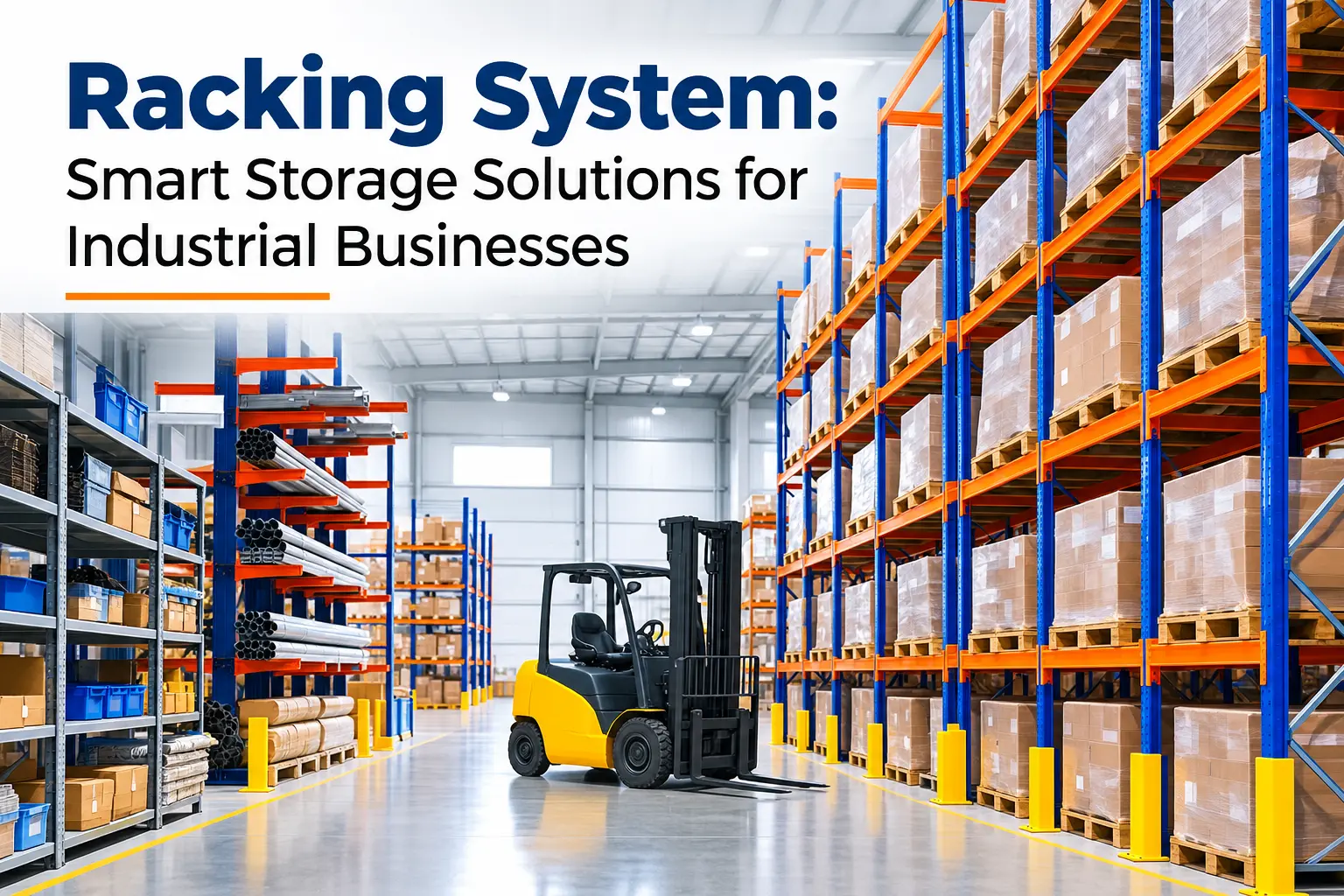
A key component of operating a profitable industrial firm is effective storage. Finding a dependable method of product arrangement becomes crucial when inventory grows and warehouse space becomes scarce. A well-thought-out racking system facilitates the creation of orderly storage spaces, streamlines the processing of inventory, and keeps workspaces tidy.
The proper storage arrangement can facilitate more efficient warehouse operations, regardless of whether a facility holds palletized commodities, finished goods, spare components, or raw materials.
How Does a Racking System Work?
A warehouse racking system is made up of beams, structural frames, and other parts intended to hold items at specific levels. Pallets, shelves, or customized supports can be used for product storage, depending on the design.
Product size, load requirements, available building height, and the equipment needed to transfer inventory are taken into consideration when planning the layout. This enables companies to create a storage arrangement that works with their unique process.
Racking Systems for Different Storage Needs
Every warehouse handles different products, so one storage design may not suit every operation.
- Pallet Storage Systems: Organize palletized inventory and provide access based on the selected rack configuration.
- Industrial Shelving: Store smaller items, cartons, tools, and components in accessible compartments.
- High-Density Racking: Increase storage density for facilities that need to accommodate larger quantities of inventory within limited floor space.
- Long-Product Racking: Support bulky materials such as pipes, timber, and metal sections using suitable cantilever designs.
- Multi-Level Storage: Use mezzanine structures to create additional storage or working areas when the building and structural design permit.
Choosing between these options requires an understanding of how products enter, move through, and leave the warehouse.
What Makes a Warehouse Racking Layout Effective?
Accessibility, safe mobility, and storage capacity are all balanced in a good layout. The efficiency of a warehouse is not always increased by merely adding more racks.
Think about keeping suitable forklift aisles, separating fast-moving items from slow-moving inventory, and placing often selected items in easily accessible locations for staff members.
Reducing picking errors can also be aided by well-organized storage spaces and clear product identification. Rack load limitations should also be shown and adhered to, and any broken parts should be examined and fixed right away.
Custom Racking Systems for Saudi Arabian Warehouses
Warehouses in Saudi Arabia warehouses support a range of sectors, such as manufacturing, transport, retail distribution, and construction. Depending on the products they handle and the amount of inventory they manage, their storage requirements can differ greatly.
Instead of depending on a conventional architecture for every application, an appropriate industrial racking system should take into account the real needs of the facility. Space availability, equipment for processing materials, product flow, load requirements, and prospects for future growth should all be taken into consideration when making plans.
Final Thoughts
The right racking system can help businesses establish a more structured warehouse, use available space effectively, and simplify inventory handling. Careful planning before installation helps ensure that the chosen configuration supports operational requirements and safe working practices.
From selective pallet storage to specialized industrial racking, the best solution is one that matches your products, workflow, and long-term storage goals.